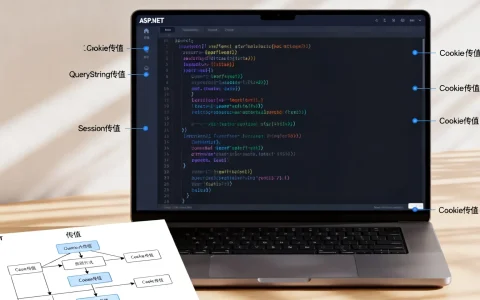


ASP.NET Core自定义请求处理:深入解析与高级实践
ASP.NET Core的请求处理管道是其强大灵活性的核心,掌握自定义请求处理技术,意味着开发者能精准控制应用的每个请求/响应环节,构建高性能、高扩展性的解决方案。

请求管道核心机制剖析
ASP.NET Core请求处理本质上是中间件的委托链(RequestDelegate),每个中间件:
- 可选择处理传入请求 (
HttpContext) - 可将请求传递给管道中的下一个中间件
- 可在下一个中间件执行前后执行逻辑
- 可选择直接终止管道并响应
管道构建发生在 Startup.Configure 方法中:
public void Configure(IApplicationBuilder app, IWebHostEnvironment env)
{
    app.UseRouting();
    app.UseAuthentication();
    app.UseAuthorization();
    app.UseEndpoints(endpoints => { endpoints.MapControllers(); });
}
实现自定义中间件:核心手段
内联方式 (快速轻量)
app.Use(async (context, next) =>
{
    // 请求前逻辑 (e.g., 记录请求时间、验证Header)
    var startTime = Stopwatch.GetTimestamp();
    await next.Invoke(); // 将请求传递给下一个中间件
    // 响应后逻辑 (e.g., 记录耗时、添加自定义Header)
    var elapsedMs = Stopwatch.GetElapsedTime(startTime).TotalMilliseconds;
    context.Response.Headers.Add("X-Processing-Time", $"{elapsedMs}ms");
});
适用场景:简单逻辑(日志、Header操作)、快速原型验证。
基于约定的类 (结构清晰、可复用)
public class CustomHeaderMiddleware
{
    private readonly RequestDelegate _next;
    private readonly string _headerName;
    private readonly string _headerValue;
    public CustomHeaderMiddleware(RequestDelegate next, string headerName, string headerValue)
    {
        _next = next;
        _headerName = headerName;
        _headerValue = headerValue;
    }
    public async Task InvokeAsync(HttpContext context)
    {
        context.Response.OnStarting(() =>
        {
            context.Response.Headers.Add(_headerName, _headerValue);
            return Task.CompletedTask;
        });
        await _next(context);
    }
}
// 扩展方法便于注册
public static class CustomHeaderMiddlewareExtensions
{
    public static IApplicationBuilder UseCustomHeader(this IApplicationBuilder app, string headerName, string headerValue)
    {
        return app.UseMiddleware<CustomHeaderMiddleware>(headerName, headerValue);
    }
}
// Startup.Configure 中使用
app.UseCustomHeader("X-Powered-By", "MyCustomFramework");
优势:依赖注入支持、参数化配置、强类型、易于单元测试、代码组织良好。
适用场景:复杂逻辑、需要依赖服务(如数据库、缓存)、高复用性组件(认证、压缩、缓存)。

基于接口的中间件 (IMiddleware)
实现 IMiddleware 接口:
public class DiagnosticMiddleware : IMiddleware
{
    private readonly ILogger<DiagnosticMiddleware> _logger;
    public DiagnosticMiddleware(ILogger<DiagnosticMiddleware> logger)
    {
        _logger = logger;
    }
    public async Task InvokeAsync(HttpContext context, RequestDelegate next)
    {
        _logger.LogInformation($"Request started: {context.Request.Path}");
        try
        {
            await next(context);
            _logger.LogInformation($"Request completed: Status {context.Response.StatusCode}");
        }
        catch (Exception ex)
        {
            _logger.LogError(ex, "Request processing error");
            throw; // 或进行自定义错误处理
        }
    }
}
// 注册服务 (Startup.ConfigureServices)
services.AddTransient<DiagnosticMiddleware>();
// 使用 (Startup.Configure)
app.UseMiddleware<DiagnosticMiddleware>();
优势:显式生命周期管理(通过DI容器)、天然支持构造函数依赖注入、更符合面向接口原则。
适用场景:需要精细控制中间件生命周期、依赖项复杂、需严格测试。
高级自定义策略与实战技巧
基于终结点 (Endpoint) 的精细化控制
ASP.NET Core 3.x+ 的路由终结点 (Endpoint) 提供了强大的元数据驱动机制:
// 自定义元数据属性
[AttributeUsage(AttributeTargets.Method | AttributeTargets.Class)]
public class RequiresApiKeyAttribute : Attribute, IEndpointMetadataProvider
{
    public void PopulateMetadata(EndpointMetadataContext context)
    {
        context.EndpointMetadata.Add(new ApiKeyRequirement());
    }
}
public class ApiKeyRequirement : IAuthorizationRequirement { }
// 自定义授权处理器
public class ApiKeyHandler : AuthorizationHandler<ApiKeyRequirement>
{
    protected override Task HandleRequirementAsync(AuthorizationHandlerContext context, ApiKeyRequirement requirement)
    {
        // 验证 API Key 逻辑...
        if (IsValidApiKey(context))
        {
            context.Succeed(requirement);
        }
        return Task.CompletedTask;
    }
    ...
}
// 应用到Controller或Action
[HttpGet("secure-data")]
[RequiresApiKey]
public IActionResult GetSecureData() { ... }
// 注册授权策略 (Startup.ConfigureServices)
services.AddAuthorization(options =>
{
    options.AddPolicy("ApiKeyPolicy", policy => policy.Requirements.Add(new ApiKeyRequirement()));
});
services.AddSingleton<IAuthorizationHandler, ApiKeyHandler>();
价值:将策略(如授权、缓存规则、限流)直接绑定到路由端点,实现声明式、高内聚的配置。
动态管道分支 (UseWhen, MapWhen, Map)
根据请求条件动态改变管道流向:
Map:基于路径前缀创建独立分支MapWhen:基于复杂谓词 (Func<HttpContext, bool>) 创建分支UseWhen:类似MapWhen,但分支执行后返回主管道app.UseWhen(context => context.Request.Path.StartsWithSegments("/admin"), adminBranch => { adminBranch.UseMiddleware<AdminAuthenticationMiddleware>(); adminBranch.UseMiddleware<AdminAuditMiddleware>(); // 分支执行完后,控制流回到主管道继续执行后续中间件 });应用场景:为特定路径(如
/admin、/api)应用特殊中间件链(认证、日志格式、限流)。

自定义 IApplicationBuilder 扩展
封装复杂管道配置逻辑:
public static class CustomPipelineExtensions
{
    public static IApplicationBuilder UseCustomExceptionHandling(this IApplicationBuilder app)
    {
        return app.UseExceptionHandler(errorApp =>
        {
            errorApp.Run(async context =>
            {
                var exceptionHandler = context.Features.Get<IExceptionHandlerFeature>();
                var logger = context.RequestServices.GetRequiredService<ILogger<Program>>();
                logger.LogError(exceptionHandler.Error, "Unhandled exception");
                context.Response.StatusCode = StatusCodes.Status500InternalServerError;
                context.Response.ContentType = "application/json";
                await context.Response.WriteAsync(JsonSerializer.Serialize(new { error = "An unexpected error occurred." }));
            });
        });
    }
}
// Startup.Configure 中使用
app.UseCustomExceptionHandling();
优势:提升 Configure 方法可读性、复用标准配置、强制最佳实践。
关键考量与最佳实践
- 中间件顺序至关重要:顺序直接影响行为(如认证必须在授权之前)。
- 性能优化:避免阻塞调用;谨慎使用同步操作;高效处理大请求体/响应体(流式处理)。
- 依赖注入:利用DI获取服务(通过构造函数或
InvokeAsync方法参数),避免紧耦合和ServiceLocator反模式。 - 异常处理:在管道早期注册全局异常处理中间件 (
UseExceptionHandler/UseDeveloperExceptionPage) 捕获下游异常。 - 可测试性:设计中间件时考虑单元测试(模拟
HttpContext、RequestDelegate)和集成测试。 - 谨慎短路管道:确保
next.Invoke()仅在需要后续处理时调用;直接响应时设置合理的状态码和内容。 - 关注
HttpContext生命周期:理解其在请求中的生存期,避免不当存储引用导致问题。
典型应用场景
- 统一认证/授权:实现JWT验证、API Key认证、自定义Claims转换。
- 请求/响应日志与审计:记录详细请求信息、响应时间、敏感操作。
- 全局异常处理与格式化:统一异常响应结构,隐藏敏感堆栈信息。
- 自定义请求/响应转换:数据加解密、协议转换(如 gRPC<->HTTP)、内容协商增强。
- 限流与熔断:集成令牌桶、固定窗口等算法保护API。
- 性能监控:注入TraceID、记录关键性能指标(KPI)。
- AOP(面向切面编程):实现日志、事务、缓存等横切关注点。
- 构建轻量级网关/反向代理:实现简单的路由、聚合、负载均衡功能。
性能优化进阶
IHttpContextAccessor与 AsyncLocal:深入理解其工作原理,避免在中间件中滥用导致性能下降或上下文污染。- 池化与重用:对于高并发场景,考虑对象池化(如
ArrayPool<byte>)减少GC压力。 - 最小化分配:避免在中间件热路径中创建大量短期对象。
- 高效流处理:使用
PipeReader/PipeWriter进行请求/响应体的流式读写,避免全量缓冲。 - 异步全链路:确保中间件逻辑完全异步化,避免阻塞线程池线程。
ASP.NET Core自定义请求处理能力是其区别于传统框架的核心优势,通过深入理解中间件管道、终结点路由、依赖注入等机制,开发者能够构建出高度模块化、易于维护且性能卓越的Web应用,从简单的Header操作到复杂的协议转换网关,自定义请求处理为应对现代Web开发的多样化挑战提供了坚实基础。
你在项目中遇到过哪些棘手的请求处理需求?是性能瓶颈、复杂授权逻辑,还是需要实现特殊的协议转换?欢迎分享你的挑战与解决方案,共同探讨ASP.NET Core的深度实践!
首发原创文章,作者:王坚,如若转载,请注明出处:https://idctop.com/article/9707.html