


在 Python 中,去掉字符串中的单引号 有几种常用方法,以下是详细说明和示例:
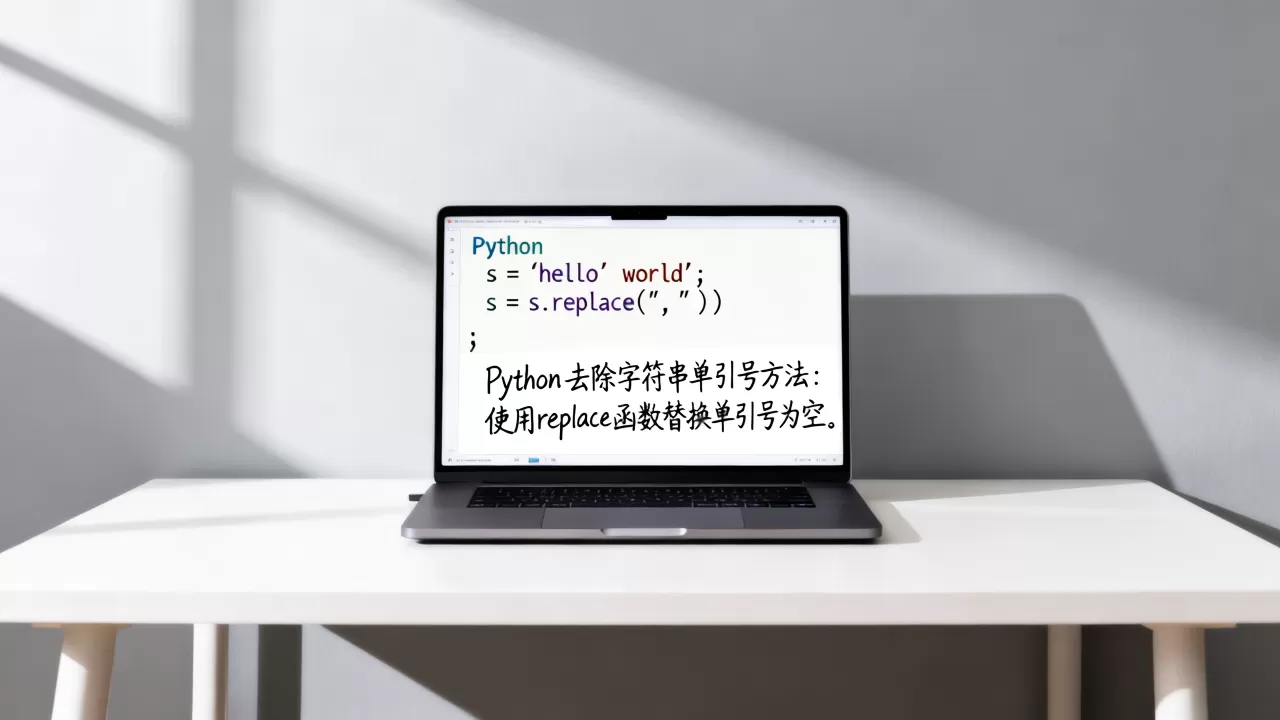
✅ 方法一:使用 str.replace()
text = "It's a 'test' string."
result = text.replace("'", "")
print(result)  # 输出: Its a test string.
⚠️ 注意:这会去掉所有单引号,包括可能用于表示字符串本身的引号(但在变量内容中通常没问题)。


✅ 方法二:使用 str.strip()(仅去掉首尾的单引号)
text = "'Hello World'"
result = text.strip("'")
print(result)  # 输出: Hello World
✅ 适合处理类似 JSON 或 CSV 中包裹字符串的单引号。
✅ 方法三:使用正则表达式

re.sub()

re.sub()
import retext = "It's a 'test' string."result = re.sub(r"'", "", text)print(result) # 输出: Its a test string.
✅ 更灵活,适合复杂模式匹配。
✅ 方法四:列表推导式 + join()
text = "It's a 'test' string."
result = ''.join(char for char in text if char != "'")
print(result)  # 输出: Its a test string.
📌 选择建议:
- 如果只想去掉首尾的单引号 → 用
strip("'") - 如果要去掉所有单引号 → 用
replace("'", "")或re.sub() - 如果需要更复杂的过滤逻辑 → 用列表推导式或正则
首发原创文章,作者:王坚,如若转载,请注明出处:https://idctop.com/python%e6%80%8e%e4%b9%88%e5%8e%bb%e6%8e%89%e5%8d%95%e5%bc%95%e5%8f%b7%ef%bc%9fpython%e5%8e%bb%e9%99%a4%e5%ad%97%e7%ac%a6%e4%b8%b2%e4%b8%ad%e5%8d%95%e5%bc%95%e5%8f%b7%e7%9a%84%e6%96%b9%e6%b3%95/